Use case 02
Elections & society. Understand change without manipulating it.
Societies shift slowly, then suddenly. A social twin combines past results, demographics and economic data at area level, so researchers and journalists can explore how participation and opinion might move under different conditions.
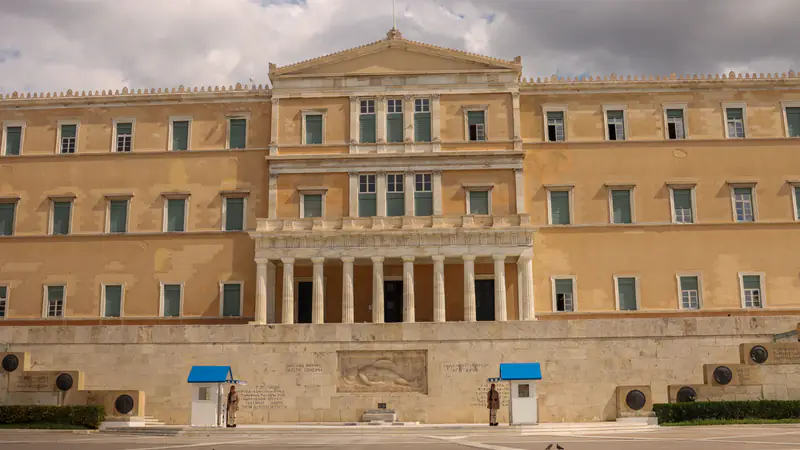 Photo: Efrem Efre · Pexels License
01 · The questions
Beyond the election forecast. The research questions.
A social twin asks how participation and opinion might move under different conditions, at the level of areas and groups. These are research questions for public debate, not tools to persuade or target anyone. Any answer would be a range with its assumptions shown.
Which regions changed most between past elections, and what else changed there at the same time?
How sensitive is an outcome to small shifts in a few areas?
02 · What the twin would model
A synthetic population, not voter files. What the twin would model.
The twin combines official past results, demographics and economic data at area level, never individual voters. Where behaviour matters, methods such as agent-based models can work with a synthetic population: simulated people built from aggregate statistics, not real profiles. Every public scenario would come with its method.
Layers
03 · Audience
Research on turnout and society. Who it is for.
This twin is meant for people who study participation and social change, and for the public that follows their work. We model areas and groups only, and we will publish the methods behind any public scenario.
- Political scientists
- Universities
- Think tanks
- Journalists
- Public bodies that study participation
04 · Public sources
Public sources we plan to start from.
We plan to start from open public data and add partner data only with clear agreements. For each dataset we record where it came from, when it was updated and what its limits are.
Listing a source does not mean we have a partnership with it. These are public datasets we plan to evaluate.
05 · Research
From our research.
Background reading from our research notes, with a source for every claim. These articles explain the public data and the methods behind this use case.
Methods
Agent-based models, explained, and how to use them without profiling people
What an agent based model is, from Schelling's segregation model to epidemic and evacuation simulations, and how to build one on aggregate data.
2026-11-04 · 6 min read
Methods
What-if analysis vs scenario analysis: a plain guide
What-if analysis vs scenario analysis: what each one is, when to use which, and simple examples for a municipality and a business.
2026-11-04 · 5 min read
Forecasting
How to read a forecast: when "likely" is a number
Why good forecasts give ranges, how the IPCC turns words like "likely" into probabilities, and what research says about forecasting better.
2026-11-03 · 4 min read
06 · Questions
Elections & society. Frequently asked questions.
Short answers to common questions, based on the public sources cited on this site. If yours is missing, write to us.
How do election forecasts work?
A forecast combines past data with a model and expresses the outcome as probabilities, not a single call. Good forecasters keep score: a 2014 study of a large forecasting tournament found that training in probabilistic reasoning, working in teams and tracking accuracy over time all improved results. Our social twin would not forecast election night; it explores how participation might shift under different conditions.
How should probabilistic forecasts be understood?
A probability says how sure the forecaster is. The IPCC, for example, uses a fixed scale: "likely" means 66–100% and "very likely" 90–100%. A 70% chance still leaves a 30% chance of something else, so one surprising outcome does not prove a forecast wrong. Forecasts become useful when they are scored against what happened. Read our guide to reading a forecast.
Do you predict who will win an election?
No. The aim is not an election-night prediction but understanding change, for research and public debate. A social twin would combine official past results, demographics and economic data at area level to explore how turnout and opinion might move under different conditions. Every answer would be a range with its assumptions shown, and we will publish the methods behind any public scenario.
Do you use individual voter data?
No. We model areas and groups, never individual voters. Where behaviour matters, agent-based methods can work with a synthetic population: simulated people built from aggregate statistics, not real profiles, as our agent-based models guide explains. We will not build tools for micro-targeting, persuasion campaigns or voter profiling.
07 · Other use cases
Other use cases.
Every twin starts from a specific question asked by a real user. These are the other areas we are starting with.
Early access
Want to pilot this use case?
Tell us what you would like to model. Pilot partners help decide what we build first.
Concept stage. No product is live yet.