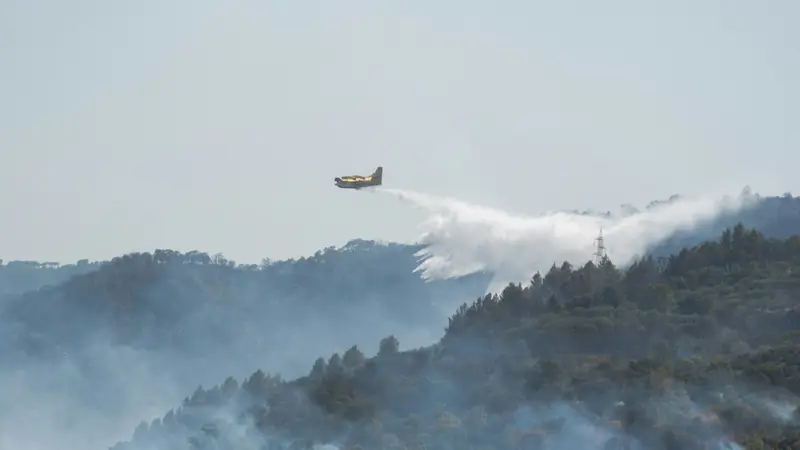
/01
Climate & disasters
Wildfire, flood, heat and earthquake scenarios for planners and responders.
Every twin starts from a specific question asked by a real user. These are the five areas we are starting with.
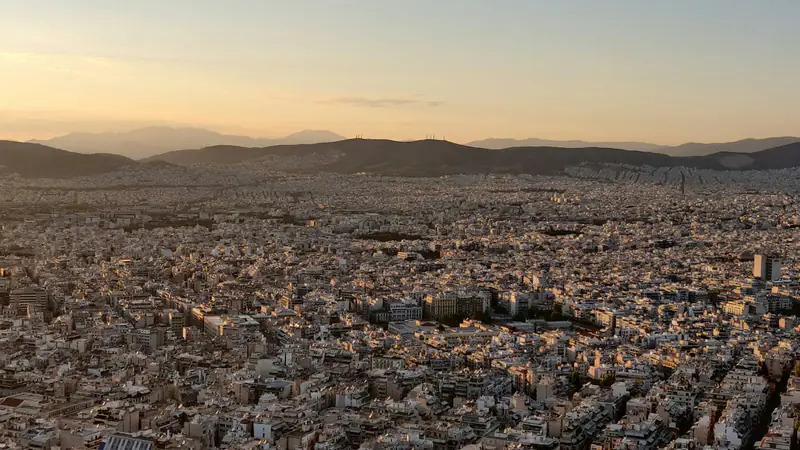 Photo: Mauricio Muñoz · Unsplash License
Scenario analysis is the common tool: change one input, run the twin many times and look at the range of outcomes. The same kind of model answers different questions about climate risk, society, population, cities and business. Each area has its own page with questions, data layers and public sources.
Wildfire, flood, heat and earthquake scenarios for planners and responders.
Model how opinion and participation might shift, for research and public debate.
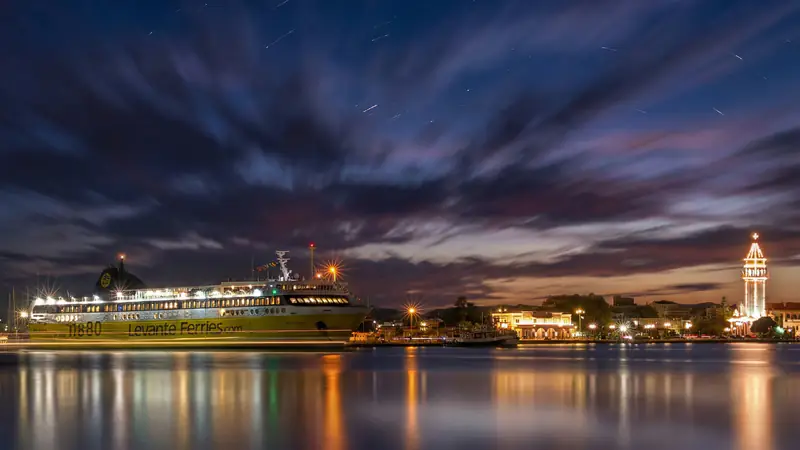
Explore ageing, movement and flows across regions and islands.
Stress-test plans and portfolios against changing conditions.
Some hazards need a page of their own. Wildfire risk to communities, flood risk assessment and the urban heat island are the first three questions we look at in detail.
Wildfire risk to communities, roads and evacuation routes.
Flood risk assessment for rivers, plains and towns.
Urban heat island maps, street by street.
Scenario analysis does not try to guess one future. It shows how outcomes change when conditions change, with the assumptions in plain view. Read how it differs from what-if analysis, and how we work step by step.
What-if analysis vs scenario analysis: what each one is, when to use which, and simple examples for a municipality and a business.
2026-11-04 · 5 min read
Why good forecasts give ranges, how the IPCC turns words like "likely" into probabilities, and what research says about forecasting better.
2026-11-03 · 4 min read
Tell us what you want to foresee. Early pilot partners shape this list.
Concept stage. No product is live yet.